Chapter 5
I Need More Paying Customers
Solve the right problem. World-class engineering still fails without a market — earn proof before you scale.
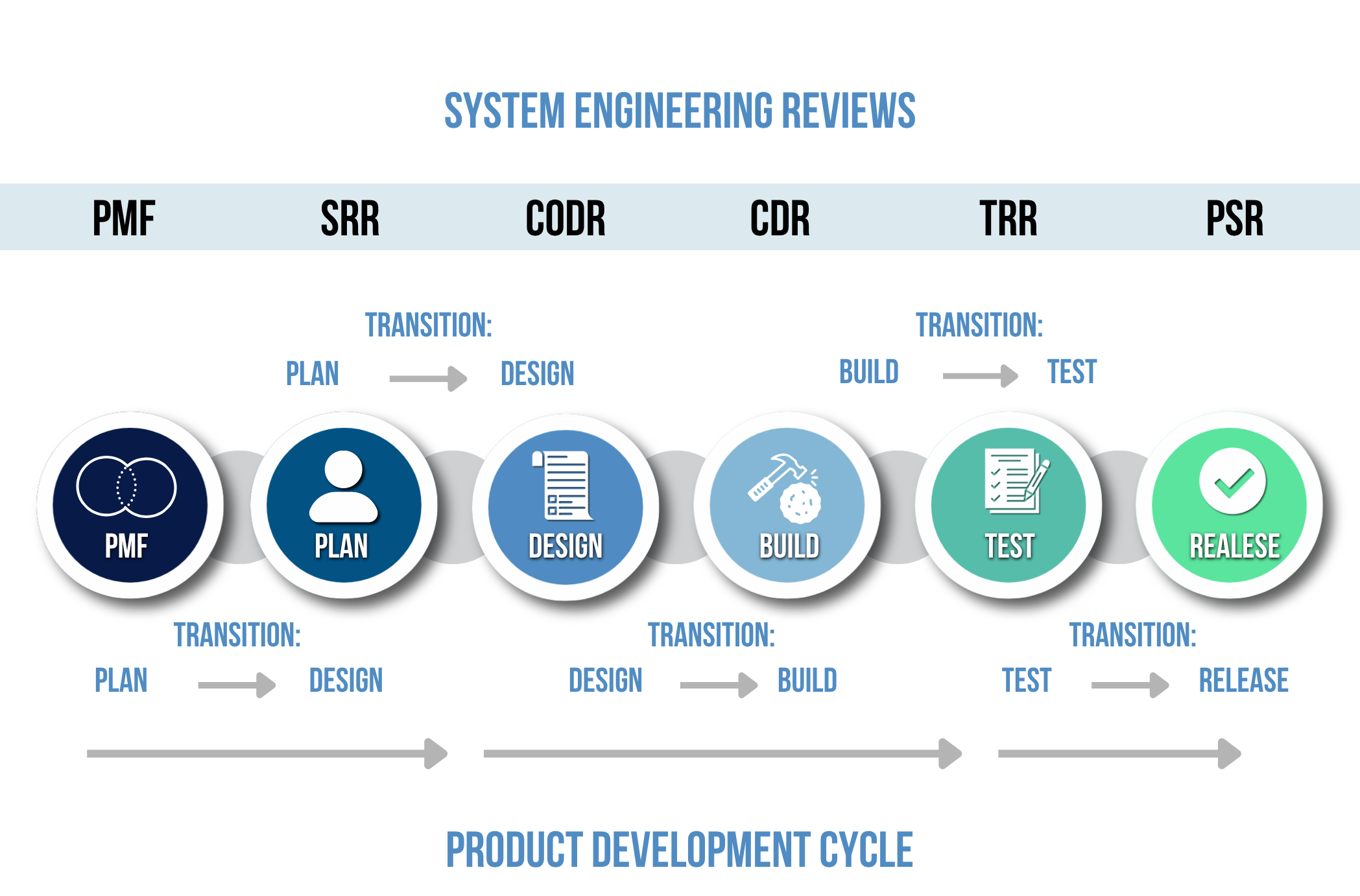
Step Inside
Product-market fit is proof earned, not a launch moment.
Airbus built the A380, a world-class aircraft, for a hub-and-spoke market that was already disappearing. Boeing's 787 aligned with how people actually wanted to fly — point-to-point. Engineering excellence isn't enough. Fit is about what's needed, not just what's possible.
This chapter reframes the work around the four PMF risks, builds a small empowered discovery trio, runs scrappy prototypes and concierge tests, adopts Dual-Track (learning and building in parallel), and watches for the signals that fit is near: returning users who complain because they care, word-of-mouth, creative workarounds, and "don't change it yet."
The four PMF risks — all four must be cleared:
- Value — Will they care? Is the problem real and the solution worth changing behavior for?
- Usability — Can they use it? Have real users operated it without guidance?
- Feasibility — Can we build it? Do we have the resources, skills, and timeline to deliver?
- Viability — Does it work for our business? Does it fit our cost structure, model, and constraints?
In this chapter, you will learn to:
- Frame the customer problem clearly before writing a line of code
- Build and run a discovery trio (PM + Designer + Lead Engineer)
- Run concierge tests and prototypes to validate before committing
- Adopt Dual-Track so learning and building run in parallel
- Recognize the market signals that tell you fit is near
- Use a PMF checklist as your go/no-go before scaling
"The number one company-killer is lack of market." — Andy Rachleff
Action Plan
Eight moves toward fit.
Eight moves toward fit
-
Frame the problem in one sentence.
Who feels it, what the pain is, and why now. Share it widely before building anything. -
Form the discovery trio.
PM + Designer + Lead Engineer. Meet twice a week. Own the problem together, not in handoffs. -
Identify 5–10 reference customers.
People who feel the pain today and are actively seeking a fix. Book interviews this week. -
List and prioritize assumptions.
Map your top three assumptions across Value, Usability, Feasibility, and Viability. -
Run one concierge or prototype test within 7–10 days.
Capture evidence, not opinions. Expect to throw the early version away. -
Adopt Dual-Track.
Keep discovery experiments flowing alongside delivery. Learning and building are not sequential — run them in parallel. -
Track PMF signals weekly.
Repeat use, complaints that show care, word-of-mouth, users pushing your product beyond its intended use, "don't change it yet." -
Use a PMF checklist as your go/no-go before scaling.
Don't hire, raise, or expand until the evidence is there.
Directed Tools and Templates
Validate fit fast.
Start with the PMF Hub for structured checklists and worksheets, then use the reference customer roster and value proposition template before committing engineering resources.
Self-Assessment
Product-Market Fit Deep-Dive
Most teams don't fail because they can't build. They fail because they build the wrong thing for the wrong market — and find out too late. Product-market fit isn't one thing, so this assessment scores five dimensions separately: you'll see which part of your fit is strong, and which part is quietly putting the rest at risk. Answer honestly — it's a mirror, not a report card.
You can also take this at community.rightsizedframework.com/communities/groups/rsf-framers-community/home.
1 = Never true · 2 = Rarely · 3 = Sometimes · 4 = Often · 5 = Consistently — answer honestly. This is a mirror, not a report card.
References & Further Study
Go Deeper
- bookInspired
- bookThe Lean Startup
- bookContinuous Discovery Habits
- article
- article
- article
- videoMasters of Scale — Finding Your 1000 True Fans
- videoLenny's Podcast — PMF with Rahul Vohra (Superhuman)
- videoHow to Find Product-Market Fit