Free Chapter · The Right-Sized Framework for Product Development
Solve the Right Problem
A Note from Dave
Thank you for reading this free chapter from The Right-Sized Framework for Product Development.
I chose the Product-Market Fit chapter because this is where many projects begin to drift, often before anyone realizes the schedule, budget, or design is in trouble.
Smart teams can build impressive products and still miss the market. The problem is usually not talent. It is usually a lack of disciplined discovery before the team commits to a solution.
That is why Product-Market Fit comes first in the Right-Sized Framework.
Before we plan, design, build, test, or release, we need to ask the harder question:
Are we building something the market wants, needs, and is willing to adopt?
This chapter is meant to help leaders pause long enough to test assumptions, clarify value, and make sure the team is moving toward real demand, not just internal enthusiasm.
I hope it helps you think more clearly about your own products, teams, and decisions.
Thanks again for reading.
Dave Robie
Learn how to move from Product-Market Fit through Plan, Design, Build, Test, and Release with the right amount of structure for complex product development.
Access tools, templates, diagnostics, and additional resources to help your team apply the framework.
Connect with Dave Robie on LinkedIn
Follow along for practical ideas on product development, leadership, systems engineering, and bringing complex products to market with confidence.
Chapter 5: Solve the Right Problem
"The number one company-killer is lack of market."
— Andy Rachleff
The Product-Market Fit Nightmare
Jesse shot up in bed, his heart pounding, the dream still vivid.
The conference room at ACME was quiet in a way Jesse had never heard before. No whiteboard debates. No clacking keyboards. No Kendra muttering about technical debt. Just the soft clink of bottles and the echo of a company winding down.
Moving boxes lined the walls. Someone had already taken the motivational poster—the one with the mountain climber that Andrew always mocked. The smart fridge prototype sat unplugged in the corner, its screen dark, a relic of what they'd believed would change everything.
Caleb handed Jesse a lukewarm beer. "The champagne's long gone," he said, attempting a smile that didn't reach his eyes.
Kendra sat cross-legged on the floor; her laptop was closed for once. "We were so close with that hotel chain," she said. "They loved the demo. Said it would revolutionize their guest experience."
"Until they didn't," Andrew added. He spun a packing tape dispenser absently in his hands. "Turns out their guests didn't want meal planning. They wanted minibars that restocked themselves. We kept pitching nutrition tracking while they kept asking about room service integration. We were solving the wrong problem the whole time."
Jesse stared at his beer. "What about the retirement communities? They seemed ready to sign."
Caleb shook his head. "We built what we thought they needed. Turns out their residents didn't want a fridge that would talk to them. They wanted one that was quiet. We never asked."
"We built a rocket," Kendra said, repeating the line that had become their bitter epitaph. "We just forgot to check if anyone wanted to go anywhere."
The silence stretched. Outside, a moving truck idled, waiting to haul away the furniture. Three years of work. Two rounds of funding. One beautiful, technically flawless product that nobody bought.
Jesse looked around at his team—talented people who had believed in the vision, who had worked weekends and missed birthdays and pushed through setbacks because they trusted that it would all mean something.
"We had the vision," Jesse said quietly. "We had the roadmap. We had the product. What we never had was proof that anyone actually wanted it."
Andrew dropped the tape dispenser into a nearby box. "Product-market fit," he said, like a doctor naming the disease after the patient had already died. "We kept saying we'd validate it after the next feature. After the next release. After the next pivot."
"After never came," Kendra finished.
The lights flickered. Los Angeles was in the middle of a heat wave again.
And then everything went black.
Jesse calmed himself, letting the dream fade. 4:47 AM glowed red from the nightstand. As he lay there catching his breath, Jesse knew it wasn't just a dream. It was a warning. A glimpse of the future they were building toward if they kept celebrating features instead of validating demand, if they kept assuming the market would come to them simply because the technology was impressive.
He grabbed his phone and opened his notes app. His thumbs moved fast, capturing the thought before it could slip away:
Vision isn't enough. We need proof. We need product-market fit—before we run out of runway to find it.
By the time his alarm went off two hours later, Jesse had already scheduled the team meeting. The subject line was simple:
"Discussion: What we're actually building—and for whom.
Product-Market Fit Is All That Matters
The number one reason startups fail is simple: they never achieve product–market fit. Every product decision reflects an assumption about current and future customers, and product–market fit is how those assumptions are validated. A perfectly engineered product still fails if customers won't pay for it. Marc Andreessen (a technology entrepreneur and venture capitalist who helped create the first widely used web browser and later co-founded the venture firm Andreessen Horowitz) captured this reality back in 2007 when he declared, "Product–market fit is the only thing that matters." He wasn't exaggerating. You can have capital, talent, cutting-edge technology, and a flawless launch plan, but if your product doesn't meet a real need for real people, none of it matters. This truth isn't limited to startups. Even in one of my favorite markets, aerospace, giants like Airbus and Boeing show how product–market fit can determine the fate of billion-dollar programs and reshape the competitive landscape.
The A380: Engineering Excellence Meets Market Mismatch
In 2000, Airbus made a bold move to challenge Boeing's dominance in wide-body aircraft by launching the A380 program, an engineering marvel designed to carry more passengers than any aircraft in history. The plane itself was a triumph of design and manufacturing. It offered unprecedented comfort, quiet cabins, and impressive performance for its size. Airbus had succeeded in building a truly remarkable aircraft. But it wasn't enough.
The company's strategic bet hinged on the hub-and-spoke model: airlines would funnel growing passenger volumes through major international airports using fewer, larger aircraft. Airbus projected demand for 1,200 Very Large Aircraft over two decades, arguing that the A380's scale would reduce per-seat operating costs by 15% compared to the Boeing 747-400.
In reality, only 251 A380s were delivered before production ended in 2021, just one-fifth of the original forecast. Emirates operated nearly half of them, while most other airlines ordered small fleets for prestige routes. No U.S. airline ever adopted it. The COVID-19 pandemic accelerated its decline, with carriers like Air France, Lufthansa, and Thai Airways retiring their fleets early. By 2024, fewer than a dozen airlines were flying the A380.
Meanwhile, Boeing took a different path. Anticipating a shift toward point-to-point travel and the desire to bypass congestion at major hubs, Boeing invested in the 787 Dreamliner. This strategy prioritized flexibility, fuel efficiency, and long-range capabilities in a mid-sized, twin-engine platform. The 787 enabled airlines to open new, direct routes that were previously unprofitable. Its commercial success, both in orders and deliveries, confirmed Boeing's sharper read on evolving airline needs.
In the end, the A380 story isn't one of technical failure but of strategic misalignment. Airbus built an exceptional airplane, but for a market that was already disappearing. Boeing, by contrast, aligned its engineering with emerging demand.
Engineering excellence is essential, but without a deep understanding of market dynamics, even world-class products can miss the mark. Product-market fit isn't just about what's possible. It's about what's needed.
The Right-Sized Approach to Product-Market Fit
This chapter will frustrate the inventor ("I have a better mousetrap"), refocus the entrepreneur ("I think I'll start a mousetrap business"), and feel like old hat to the consultant ("How can I solve your mice problem?"). And that's the point. Because when it comes to product-market fit, intelligence, passion, and funding aren't enough. Most teams fail because they skip the hardest step: figuring out what truly matters before building. This chapter unpacks what product-market fit really means, and why it's the most critical milestone to hit before scaling, hiring, or investing further.
Product-market fit isn't a marketing milestone. It's proof that your product solves a real problem. With it, your customers return, complain (because they care), and spread the word. The market pulls you forward. Without it, every feature is a guess, and every dollar is at risk. Product market fit is critical, and the Right-Sized Framework will help you reach it.
What Product-Market Fit Is Not
Eric Ries, author of The Lean Startup, highlights something many of us have internalized, often without realizing it. In the movies, a scrappy startup team rallies together, powered by passion and caffeine. A quick montage shows someone sketching on a whiteboard, someone coding through the night, and then someone yells "Eureka!" and BOOM, a product demo, applause, success.
The problem? That's not how it works in real life. The montage skips the hard part, the conversations with real customers, the flawed ideas that are tested and discarded, the pivots, the realization that your initial concept isn't nearly as valuable as you believed. It skips the discovery, and without discovery, product-market fit is left to chance.
Struggling to find product market fit isn't a sign you're doing it wrong. It's often proof that you're finally doing it right. It means you're testing, listening, and learning. Product market fit isn't something you stumble into and move on from. It's a learning curve, a journey, a continuous process of insight, iteration, and alignment.
In the sections that follow, we show how to organize the journey, test your way through the fog, and know when it's time to commit and build with confidence.
Why Most Product Teams Miss the Mark
Whether you're Airbus or our fictional friends at ACME, achieving product-market fit is make-or-break. Both Airbus and Boeing had technical talent. Both had funding. Both had a roadmap. What Airbus didn't have was a market urgently seeking their solution.
This story plays out every day in companies of all sizes, from scrappy startups to global enterprises. Teams build impressive products that no one wants and are left wondering why adoption stalls. The issue isn't poor execution. It's a misdirected effort.
Table 5-1 shows five common pitfalls that frequently sideline even the best teams. Get familiar with them so you spot these traps early and use the recommended techniques to reduce or eliminate them.
Table 5-1: Common Pitfalls & Fixes
| Pitfall | What It Looks Like | How to Reduce or Eliminate It |
|---|---|---|
| Feature Factories vs. Problem Solvers | Teams focus on shipping features rather than solving user problems. | Reframe success metrics around user outcomes, not feature count. Start with problem statements, not backlogs. |
| Velocity Over Validated Learning | Teams move fast but don't test assumptions, mistaking speed for progress. | Integrate rapid, low-cost experiments into your sprints (a sprint is a short, time-boxed period, typically two weeks, in which a team completes a set of planned tasks and delivers incremental progress toward the overall product) to validate core hypotheses. |
| No Agility in your Agile Execution | Teams use Agile ceremonies but follow rigid, pre-scoped roadmaps. | Reprioritize after each sprint, based on learning. Build flexibility into planning. |
| Shoving Product Risk to the End | Market validation is postponed until launch, increasing the cost of failure. | Identify and tackle value, usability, and viability risks early using prototypes and interviews. |
| Product Managers as Backlog Jockeys | Product managers act like task managers, not strategic problem owners. | Empower Product Managers to lead discovery and customer insight efforts, not just delivery logistics. |
| Output, Not Outcome Focused | Success is measured by delivery milestones, not by customer impact. | Shift KPIs to reflect business and user impact. E.g., retention, satisfaction, and adoption. |
Avoiding these traps requires more than speed or talent. It requires confronting the risks that determine whether your product succeeds.
The Four Big Risks of Product-Market Fit
To avoid the costly mistake of building something no one wants, your team must address four core risks before scaling. Each is a critical checkpoint on the path to product-market fit:
- Value Risk: Will they care?
This is the most fundamental risk. Are you providing a solution to a real, painful problem that customers are willing to pay for or change their behavior to address? Without clear, validated demand, everything else is irrelevant. - Usability Risk: Can they use it?
Even a valuable solution fails if people can't figure out how to use it. Usability is about clarity, simplicity, and alignment with real user behavior. It's a good design and effective function. - Feasibility Risk: Can we build it?
It's not enough for something to be technically possible. It must be feasible for your team, within your timeline, using your resources. Discovery must identify technical constraints early. - Viability Risk: Does it work for our business?
Some ideas are desirable, usable, and buildable but break your business model. Whether due to cost structure, regulatory limitations, or strategic misalignment, a product that doesn't support long-term business goals isn't viable.
Hitting all four simultaneously is rare and takes real work to achieve. It can be done by systematically addressing these four risks through user research, iterative design, technical prototyping, and business validation. This will position your team to pursue product-market fit with confidence instead of blind hope. Next, we show you how small, empowered teams make this possible.
The Power of Small, Empowered Teams
A huge staff isn't required to do discovery right. In fact, small teams often outperform large ones. Leaner groups move faster, communicate better, and adjust with less friction. That's why high-performing organizations often rely on a focused "discovery trio": product manager, designer, and lead engineer.
This trio unites three essential perspectives: customer need, user experience, and technical feasibility, within a tight feedback loop. With fewer handoffs and real-time collaboration, teams align faster and respond more intelligently to user insights.
Empowerment, however, doesn't mean autonomy without direction. The best discovery teams operate with strategic clarity and bounded freedom. They're encouraged to take risks and iterate while staying tethered to business goals. This structure isn't just efficient. It's essential to building the right product, fast. Now, let's review each role.
The Product Manager: Customer Problem Expert
The product manager isn't the boss. They're the team's guide to understanding the customer and market. They operate at the intersection of user needs and company strategy, helping prioritize which customer problems matter most. Their strength isn't having the answers, but in framing the right opportunity space and asking questions that lead to meaningful discovery.
A great product manager blends technical fluency with a data-driven mindset, enabling them to understand what's possible and prioritize the features and capabilities that matter most to customers.
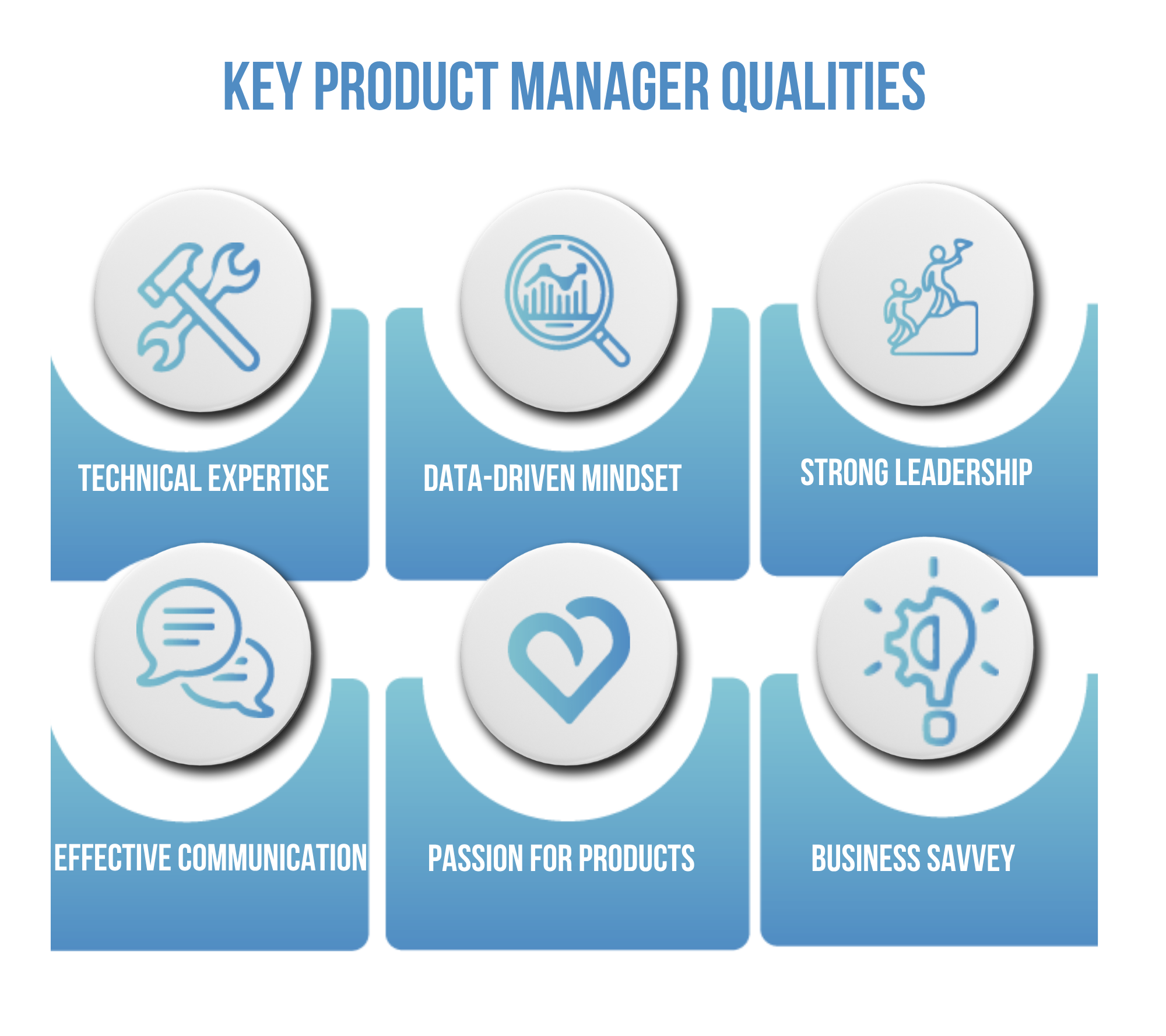
They lead by aligning diverse stakeholders around a shared vision and fostering cross-functional collaboration. As Deep Nishar, former VP of Product at LinkedIn, aptly put it: "A great product manager has the brain of an engineer, the heart of a designer, and the speech of a diplomat."
The Designer: User Experience Champion
A great product designer is a team's clearest lens into the user's world. Beyond making things look good, designers are essential to discovery, translating abstract problems into concrete, testable ideas that help the team move forward with confidence. They work side by side with product managers and engineers, not downstream from them. By engaging in the process early, they can reframe problems, expose friction in the user journey, and turn fuzzy needs into tangible prototypes. Just as important, they bring structure to user testing: framing questions with care, observing behavior objectively, and helping the team avoid confirmation bias. When designers are involved from the beginning, the entire team benefits from a more empathetic, focused, and agile approach to problem-solving.
The Lead Engineer: Technical Feasibility Guardian
The lead engineer and her team aren't just implementers. They're problem-solvers who bring critical thinking to the earliest stages of discovery. When involved from the start, they help shape better solutions by evaluating technical feasibility, system constraints, and long-term trade-offs. Their insight helps teams avoid costly missteps, reduce technical debt, and uncover more scalable, efficient paths forward. Strong engineering leaders help answer both "Can we build it?" and "Should we build it?" Thus, making engineering a driving force in innovation rather than a late-stage gatekeeper.
Collaboration Is the Heart of Discovery
The right team isn't just cross-functional. It's co-creative. Each role brings a unique perspective, and together they form a complete picture. When PMs, designers, and engineers operate as partners, not silos, you get faster cycles, better decisions, and a far better chance of building a product the market will embrace.
To help your team succeed, start with clarity. Teams can't hit a target they don't understand. Make sure the objective is well-defined, whether it's simplifying onboarding or re-engaging churned users. Give the team time to absorb it, question it, and take ownership. Then layer in the constraints: timeline, budget, or technical limits. But don't dictate. Invite conversation. Ask whether the constraints are realistic. Dialogue builds trust and commitment.
Once the team is aligned, step back. Let them figure out the best path forward. Autonomy doesn't mean silence. Set a rhythm for updates that sustains momentum without micromanagement. It's the product team's version of the OODA loop (Observe, Orient, Decide, Act — developed by John Boyd, a U.S. Air Force fighter pilot and military strategist, whose work showed that organizations that learn and adapt faster than their competitors gain a decisive advantage): observe, orient, decide, act, and repeat. Use it to stay course-corrected, not control-driven.
Ultimately, your job is to lead with vision, not with instructions. As General Patton said, "Don't tell people how to do things. Tell them what to do, and they will surprise you with their ingenuity." Give your team clarity, space, and trust, and let them surprise you.
Table 5-2: Mercenary Team vs. Missionary Team
| Mercenary Team | Missionary Team |
|---|---|
|
|
Discovery is the Work, Delivery is the Reward
It's easy to get caught up in the rush of shipping. We celebrate launches, announce releases, and high-five when a sprint closes with everything marked "Done." But here's the hard truth: shipping isn't the goal. Solving the problem is. Just because something is built doesn't mean it's working. If your team is moving fast but learning nothing, you're just speeding toward irrelevance.
This mindset shift, prioritizing learning over launching, is at the core of effective product development. Teams that miss it often chase vanity metrics: page views, downloads, sign-ups, and other surface indicators that look good on a dashboard but say little about real value. As Eric Ries warned in The Lean Startup, these metrics are deceptive. They make teams feel productive without proving that anything meaningful has been achieved.
To break out of that cycle, leading teams use what's known as a dual-track agile approach. A simple yet powerful model that separates learning from building.
The Dual-Track Agile Approach: Learning and Building in Harmony
The dual-track agile approach, championed by product leaders like Marty Cagan and Jeff Patton (Marty Cagan is the author of INSPIRED: How to Create Tech Products Customers Love, and Jeff Patton is the author of User Story Mapping: Discover the Whole Story, Build the Right Product), addresses a core tension in product development: learning what to build versus building it well. It does so by explicitly separating these activities into two distinct but interdependent tracks: discovery and delivery.
In the discovery track, the team focuses on rapid learning through experimentation. The goal is to uncover customer needs, test assumptions, and validate potential solutions before investing in full-scale development. Discovery produces insights, not features.
In the delivery track, validated ideas are built, refined, and scaled. Here, the emphasis shifts to execution: delivering high-quality, reliable, and user-friendly solutions. Engineering practices are more structured, testing is rigorous, and timelines are clearer.
The real value lies in the interaction between the two tracks: discovery generates ideas, and delivery reveals what to explore next. Learning drives execution, and execution reveals what still needs to be learned. Table 5-3 contrasts success in discovery and delivery.
Table 5-3: Success in Discovery and Delivery
| Success in Discovery Means | Success in Delivery Means |
|---|---|
|
|
Right-Sized Product Discovery Toolkit
As with all right-sized techniques, the goal is to build momentum. Your small business or mid-sized team doesn't have unlimited resources. That means your discovery process needs to be lean, focused, and doable. This section provides everything you need to run effective discovery. We provide the structure and proven tools. You bring the willingness to learn fast and adjust even faster. This toolkit delivers just enough process to avoid guesswork, without bogging your team down. Let's start where every discovery effort should begin framing the problem.
Framing Technique: Start with a Clear Target
Discovery is only useful if it's focused. And focus comes from framing. Before you start building prototypes or talking to users, your team needs to align on what problem you're solving, for whom, and why it matters. These tools help you do just that.
Opportunity Assessment: Ask the Right Questions
The opportunity assessment is a fast and effective way to decide whether a new idea is worth exploring. It doesn't require spreadsheets, market analysts, or a weeklong offsite. Just sit down with your team and answer these four key questions:
- What is the business objective? What are we trying to improve or impact, and how will we measure success?
- Who is the customer or user? Who experiences this problem, and what do we know about them?
- What is the customer problem? What pain are we trying to solve, and how is it currently being solved?
- What's the potential solution? What idea are we considering, and why do we believe it could work?
Answering these questions gets everyone on the same page, fast. It won't provide all the answers, but it will clarify what you don't know.
Planning Techniques: Turning Insights Into Action
Once your team has framed the problem and is aligned around a clear objective, it's time to turn those early insights into a structured plan. Planning in discovery isn't about Gantt charts or rigid schedules. It's about figuring out what you need to learn, how you'll learn it, and how to move from idea to insight as quickly as possible.
One technique stands out in this phase: Developing reference customers. This ensures you're testing ideas with people who have the problem you're trying to solve.
Developing Reference Customers: Who's in Pain Right Now?
No matter how clever your ideas are, they won't go far if you test them with the wrong people. That's why identifying reference customers, those feeling the pain, is a critical part of discovery. These people are actively struggling, motivated to find a solution, and willing to engage early. They don't just nod along. They challenge your assumptions and offer meaningful feedback.
How do I find these people? Start by asking, "Who's in pain right now?" Look for customers cobbling together workarounds or hacking clunky systems. Their urgency is your signal. If your product makes their life noticeably better, you're on to something. If it doesn't, they'll tell you quickly.
Once you've found these early champions, lean into the opportunity. As Marie Forleo (an entrepreneur, author of Everything Is Figureoutable, and founder of B-School, a popular online training program for entrepreneurs and small business owners), my favorite self-proclaimed "Jersey Girl" teaches using your customer's words. When something lands with emotion, write it down. No copywriter can outdo the raw truth of a customer in pain. Those words shape your product and power your best marketing.
Reference customers also keep your team grounded. When you're working with people who urgently need a solution, it's hard to fall in love with your own ideas. You stay focused on what matters. Solving a real problem in a way that's valuable, usable, and viable.
Discovery planning isn't about locking down answers; it's about knowing where to learn first and who to learn from. Paired with tools like the Empathy Map, reference customers give your team the traction to move with confidence. Table 5-4 lists discovery techniques.
Table 5-4: Testing Techniques to Drive Customer Discovery
| Technique | Description | Why It Matters |
|---|---|---|
| Concierge Tests | Manually simulate the product experience without code. "Be the product" for early users. | Reveals true user needs, tests demand cheaply, and exposes friction before investing in development. |
| Usability Testing | Observe users interacting with prototypes without guidance to identify confusion or friction. | Surfaces UX issues early, validates design assumptions, and improves usability with minimal effort. |
| A/B & Live Tests | Compare feature variations with real users to measure performance differences. | Quantify impact on key metrics like engagement and conversion; guides optimization with evidence. |
| Viability Checks | Internal conversations with sales, finance, support, and legal to test business viability. | Ensuring alignment with sales channels, pricing models, and compliance, preventing late-stage surprises. |
Prototypes: Testing Value, Usability, and Feasibility
Great discoveries do not come from guessing or over-engineering. It comes from building smart experiments that help you learn what works, and what doesn't, before investing in scale.
Prototypes are one of the most flexible tools for discovery. A good prototype isn't just a sketch or mockup. It's a test vehicle. You build it to answer a specific question about your solution, and that question falls into one of three categories: value, usability, or feasibility.
- Value prototype: Do your customers want what you're offering?
- Usability prototype: Can users navigate your solution effectively?
- Feasibility prototype: Can your team realistically build the solution?
Each prototype should have a clear test objective, a lightweight build plan, and a method for collecting feedback. You're not trying to impress users. You're trying to learn quickly. Keep the fidelity just high enough to get useful responses, and don't be afraid to throw it away afterward. That's what makes it a prototype, not a product.
Plan to Throw One Away
Fred Brooks, the legendary computer scientist and author of The Mythical Man-Month, once wrote: "Plan to throw one away; you will, anyhow." That single sentence has saved countless hours of effort and frustration in teams I've worked with.
Engineers, by nature, are perfectionists. They often hesitate to release an early prototype, holding it back until it feels polished. But when you start with the expectation that the 1st prototype will be thrown away, you release the pressure. Suddenly, it's not about shipping something flawless. It's about learning.
This mindset allows teams to move faster. Engineers feel free to build minimum viable solutions, test them in the real world, and save their pride of workmanship and "oh wait, another cool thing would be" for the second or third version, where real product quality is shaped. This approach encourages creative risk-taking early, when it's cheap to be wrong, and sets the stage for real excellence later.
How to Know You're Getting Close to Product-Market Fit
Product-market fit isn't a milestone you cross with confetti and champagne. It's more like a rising tide. You don't always see it at first, but suddenly things feel different. You stop chasing customers, and they start coming to you. You stop guessing what to build, and users start telling you what they need. You stop wondering if you've got something and start scrambling to keep up with demand.
So how do you know when you're close? Table 5-5 lists the most important signs.
Product-market fit doesn't mean the product is perfect. But instead of pushing the market, you begin to feel it pulling you forward. New use cases appear, deployments grow, and customers invest more deeply.
Table 5-5: How You Know When You Are Close to Product-Market Fit
| Sign | Explanation | Why It Matters |
|---|---|---|
| Customers come back and complain. | Repeat usage and customer complaints indicate that users are engaged and expect the product to work for them. | Complaints show emotional investment; indifference is more dangerous. Returning users and vocal feedback are signs of potential product-market fit. |
| Your product spreads via word-of-mouth. | Organic recommendations suggest that the product solves a meaningful problem and creates enthusiasm. | People only share solutions they find valuable and impressive. Word-of-mouth drives low-cost, high-trust customer acquisition. |
| People are hacking your product to make it do more. | Users modifying the product or requesting extensions show that it's becoming integral to their workflow. | Customers going beyond a product's intended use shows the product's value is greater than expected, pointing to scalability and new use cases. |
| Your reference customers say, "Don't change anything … yet." | Requests to delay changes signal that the product is being adopted at scale and relied upon in real scenarios. | Early adopters asking for stability means the product has transitioned from experiment to dependable tool, indicating maturity and trust. |
Action Steps: Ensuring Your Product-Market Fit
Answer this list of questions. If you work through them easily, you're ready to shift your focus to delivery. If not, go back, clarify, test, and learn. This simple step helps avoid wasted effort, misaligned teams, and products that miss the mark.
- Can you frame the problem clearly in one sentence?
- Have you gathered evidence? Is this problem worth solving?
- Have you tested with real users? What happened?
- Is this viable for your business?
- Are your engineers involved? Are they expanding what is possible?
Key Takeaways: Right-Sized Product-Market Fit
- Product-market fit isn't a moment. It's a process. You don't suddenly have product-market fit: you work toward it.
- Don't fall in love with your product. Fall in love with the problem. Great products solve real problems for real people.
- Discovery is the real work. Delivery is the reward. Building too early is one of the most common (and expensive) startup mistakes.
- The four big risks must be addressed: value, usability, feasibility, and viability. Ignore any of them and your product is on shaky ground.
- Keep your team small, empowered, and cross-functional. The product manager, designer, and engineer must work together from the start.
- Test smart, not big. Use concierge prototypes, fake door tests, and user feedback to validate ideas before you commit significant engineering resources.
- Product-market fit is noisy, then obvious. Customers complain (because they care), but they come back, tell their friends, and find creative ways to use what you've built.
From Fit to Forward Motion
You've framed the problem, validated the idea, built scrappy prototypes, and confirmed that real people want what you're building. Congratulations, you're on the path to product-market fit.
But now comes the fun part: turning that validated idea into something real.
The next chapters are all about execution. We're going to show you how to take what you've learned during discovery and balance it with structured, accountable delivery, without sacrificing the agility you need to keep learning along the way.
References and Further Reading
Books: Best Sellers & Industry Must-Reads
- Inspired: How to Create Tech Products Customers Love by Marty Cagan
The definitive guide to modern product management, this book is packed with strategies for empowering teams, continuous discovery, and delivering value, not just features. - The Lean Startup by Eric Ries
Introduces the "build–measure–learn" loop, one of the most practical methods for testing value, usability, and viability before scaling. Essential for avoiding the costly trap of building too much, too soon. - Continuous Discovery Habits by Teresa Torres
A hands-on playbook for making discovery a weekly habit. Torres's Opportunity Solution Tree offers a powerful visual framework for mapping hypotheses and learning your way toward product-market fit.
Web Resources: Articles, Blogs & Frameworks
- First Round Review: "Product-Market Fit Playbook"
A deep dive into practical ways to identify, measure, and sustain product-market fit, including Sean Ellis's famous product-market fit survey method. - Marty Cagan – Silicon Valley Product Group Blog
Insight-rich articles on discovery, empowered teams, and solving real customer problems, directly from one of the most influential product thinkers. - Strategyzer: "Value Proposition Canvas"
A structured, visual tool to clarify customer jobs, pains, and gains and align your product's value proposition accordingly. Perfect for reducing value risk.
Podcasts & Videos: Learn from Experts
- Masters of Scale: "Finding Your 1000 True Fans" with Reid Hoffman
Explores how early traction and deeply engaged customers signal product-market fit and how to cultivate them strategically. - Lenny's Podcast – "The Ultimate Guide to Product-Market Fit" with Rahul Vohra (Founder of Superhuman)
Vohra shares Superhuman's method for measuring and methodically increasing product-market fit, including the 40% survey rule. - Y Combinator – "How to Find Product-Market Fit" (Michael Seibel)
Straightforward, no-fluff advice from YC's managing director on how to test, iterate, and know when you're ready to scale.
Continue the Right-Sized Framework
Thank you for reading this free chapter from The Right-Sized Framework for Product Development.
If this chapter helped you think differently about Product-Market Fit, I invite you to continue with the full framework.
Learn how to move from Product-Market Fit through Plan, Design, Build, Test, and Release with the right amount of structure for complex product development.
Access tools, templates, diagnostics, and additional resources to help your team apply the framework.
Connect with Dave Robie on LinkedIn
Follow along for practical ideas on product development, leadership, systems engineering, and bringing complex products to market with confidence.